Improving public health outcomes through collaborative modeling
Use the hubverse data standards and software to:
- Collaborate with modelers around the world
- Share insights in real time
- Inform critical decisions with robust and validated model outputs
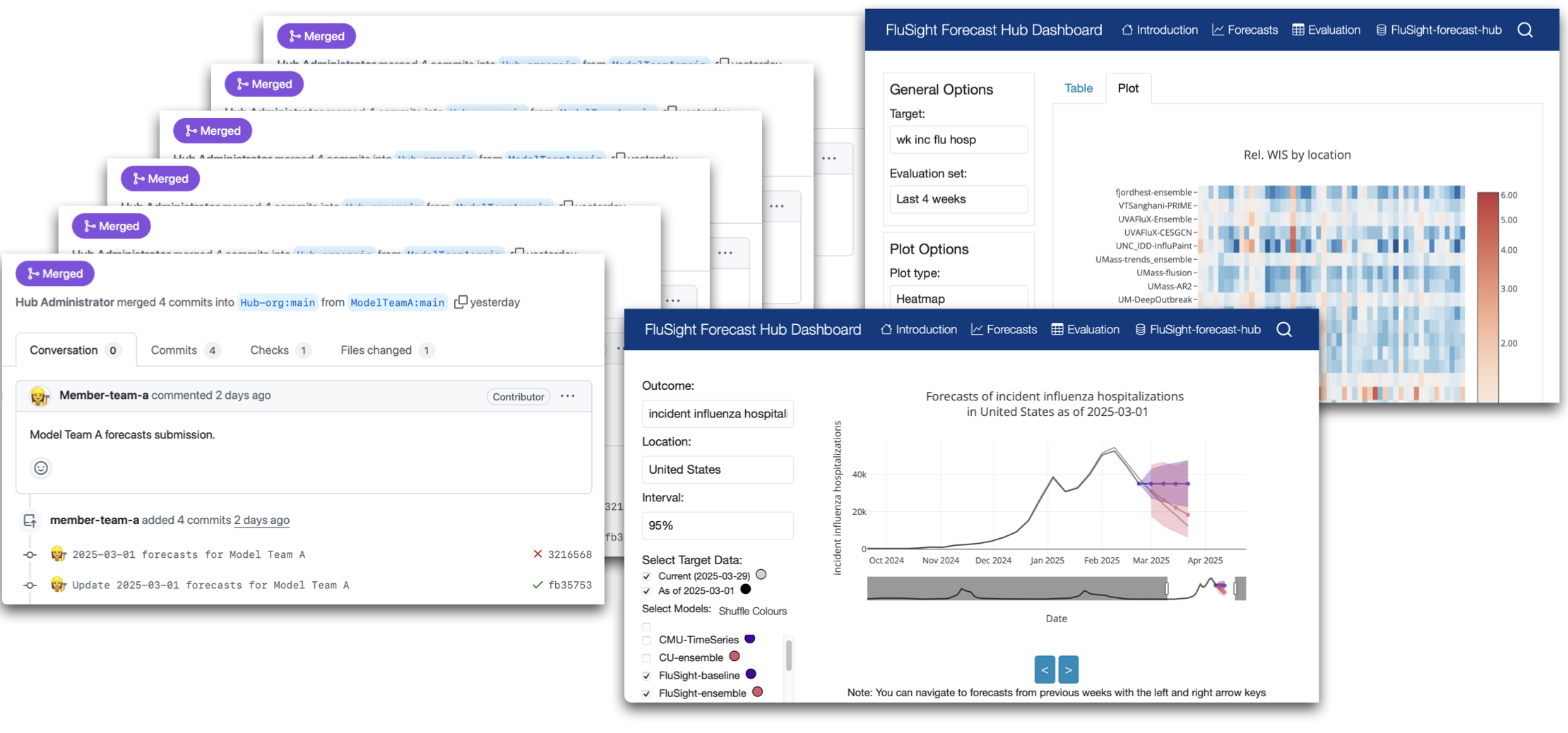
Get started with a gentle introduction to modeling hubs.
Data Standards
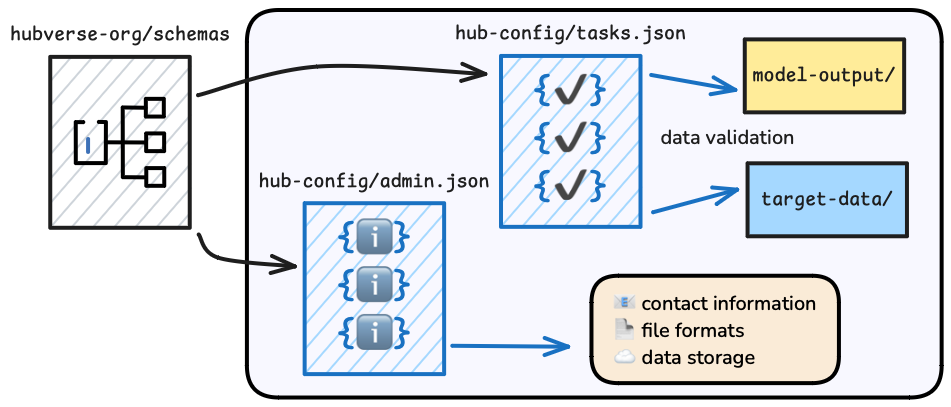
The core of the hubverse are the robust and flexible data standards that allow administrators to write structured guidelines for tabular model output submissions that can be easily validated, ensembled, and visualized.
Software
hubverse software is written in R, Python, and JavaScript, and provides tools for all phases in the life cycle of a hub.
- set up and manage a hub with hubAdmin
- validate model submissions with hubValidations
- fetch model and target data with hubData
- ensemble models with hubEnsembles
- evaluate model performance with hubEvals
- visualize forecasts with hubVis
- … and more!
All of these packages are available at the hubverse R-Universe
Testimonials

West Nile Virus Forecasting Hub
We wanted to launch the first West Nile Virus Forecasting Challenge in the state of California to support existing efforts in reducing disease prevalence. The hubverse tools have been a crucial component in our setup as they allow for standard submission formats and validations, which encourage participation and collaborations from external teams.
— Dr. Héctor M. Sánchez C
(California Department of Public Health)

Southern Hemisphere Severe Acute Respiratory Infection Forecast Hub
Hubverse tools have been instrumental in enabling us to scale infectious disease forecasting globally, including to regions that have historically lacked access to real-time forecasts. Their standardized, flexible infrastructure makes it possible to rapidly deploy and coordinate forecasting efforts across many regions.
— Dr. Spencer J Fox
(Northern Arizona University)

Australia-Aotearoa Forecasting Hub
The hubverse tools and team were instrumental in getting our hubs up and running. The materials provided a solid foundation for us to build upon, and were easily extendable to personalise the hubs to our unique data use cases. The team and broader community provide welcome support.
— Dr. Saras Windecker
(Australia-Aotearoa Consortium for Epidemic Forecasting & Analytics)
Built with the hubverse
Cool projects made possible by the hubverse, built by teams across the community.

RespiLens
UNC Chapel Hill / ACCIDDA (Atlantic Coast Center for Infectious Disease Dynamics and Analytics)
RespiLens is a responsive web app to visualize respiratory disease forecasts in the US, focused on making hubverse data accessible for state health departments and the general public.
Visit project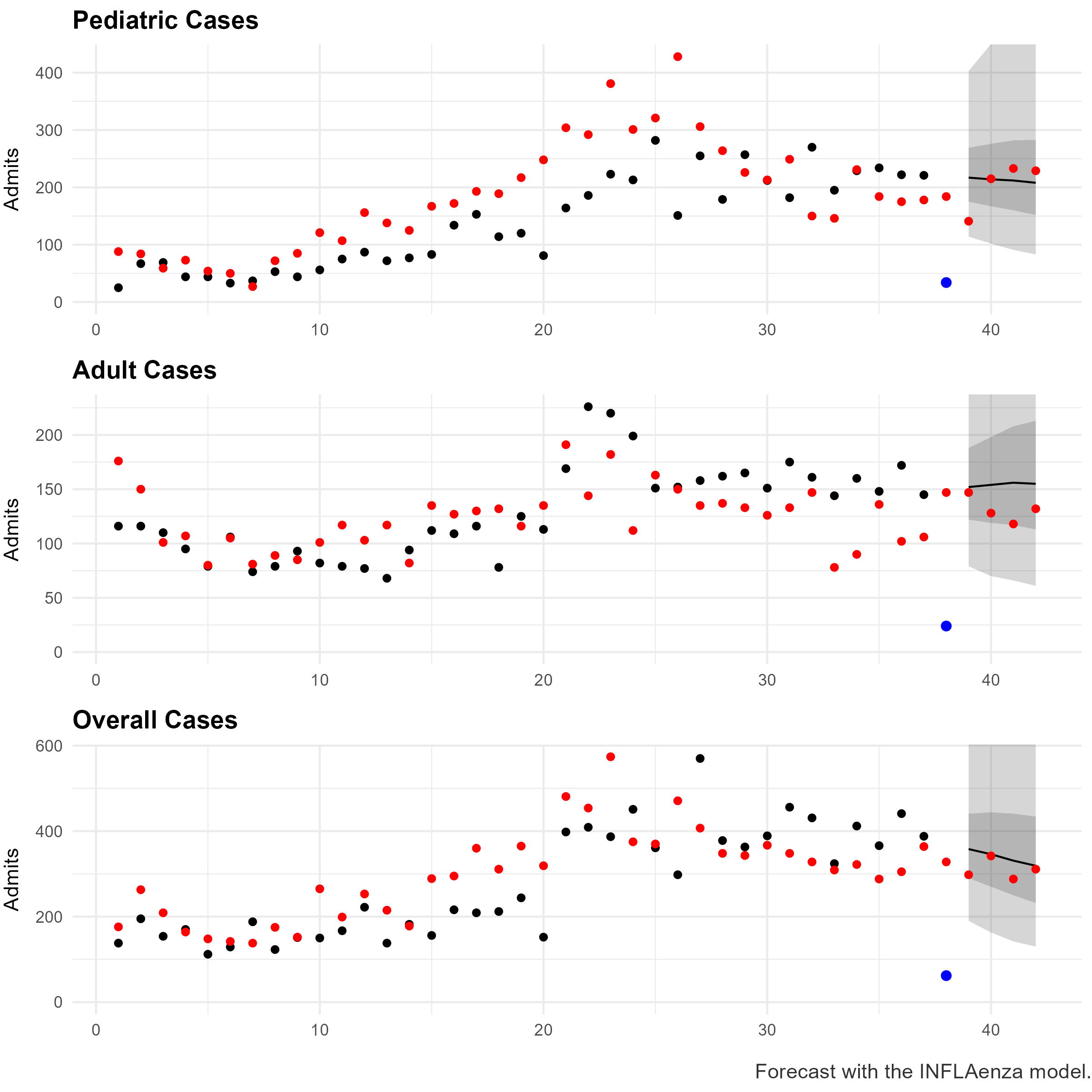
MicroHubs
Northern Arizona University
A MicroHub is a forecasting dashboard can be run locally on a laptop (without making any data public) that helps public health teams load surveillance data, run infectious disease forecast models, compare results, and export hub-ready probabilistic forecasts. R Shiny app built to run with Docker Desktop.
Visit project
EpiBenchmark
UNC Chapel Hill / ACCIDDA (Atlantic Coast Center for Infectious Disease Dynamics and Analytics)
EpiBenchmark is a benchmarking framework and challenge library for the standardized evaluation and comparison of infectious disease forecasting models.
Visit project
Hubverse Support Tools
Clemson University / DMA-PRIME
Hubverse Support Tools is a set of browser-based tools that help modeling teams prepare metadata, format data, and navigate GitHub submissions for hubverse hubs — no coding required.
Visit projectOrganizations using the hubverse
Do you have a hub, but it’s not listed? Tell us about your hub!